
When people hear that yoga is part of my work, they often bring assumptions with them. So I want to share what yoga is—and is not—for me, and how my approach might help you to get more from your practice, too.
Yoga, as I practice and teach it, is not a spiritual belief system. My yoga practice builds strength, improves mobility, and develops awareness that supports how we move, think, and respond to life.
For me, yoga is a physical and neurological practice of awareness—a way to listen to the body, notice sensation, and move with intention.
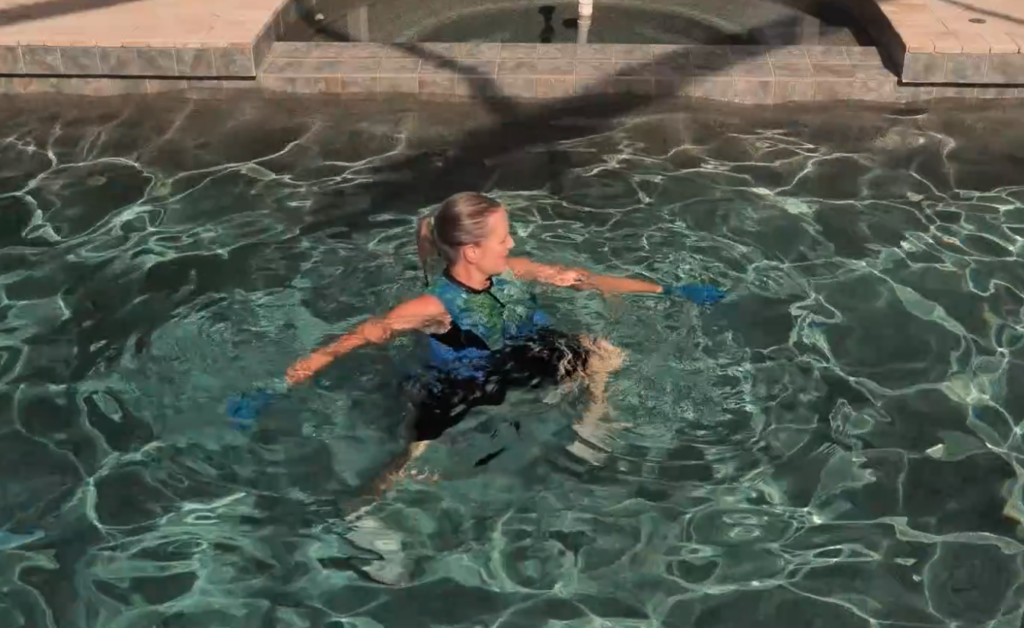
How This Path Began
Fifteen years ago, I received a phone call that would change the direction of my work.
Lori Sherlock, an exercise physiologist at West Virginia University, had been using high-intensity interval training in aquatic classes long before HIIT became a household name—because it worked.
She wanted to collaborate on a new aquatic program, and at the time, my signature work was Stretch Fusion, a yoga-inspired approach built on dynamic movement, functional strength, and body awareness.
Lori recognized something important: pairing intensity with awareness would allow people to train across the full spectrum of what the body needs.
That conversation became HIYO™ Intervals.
What we didn’t realize then was that HIYO would become more than a workout. It would become a training system that meets everyone from high-level athletes to people recovering from surgery, building strength, resilience, and metabolic capacity for real-world performance.
What the “YO” Really Means

In HIYO, I’m responsible for the “YO.”
The YO is not about coaching you into picture-perfect yoga poses or Instagram-style flexibility. You won’t hear me giving cues aimed at how a movement looks.
Instead, the YO is about how a movement feels.
If you practice yoga, exercises in HIYO workouts will feel familiar—chair, warrior, triangle, tree—but these are templates, not destinations. My role is to guide you with questions:
-
- Where do you feel this?
-
- What changes if you slow it down?
-
- How does your right side compare to your left?
-
- Can you find a little more space here?
The goal isn’t depth or perfection. The goal is awareness that supports strength, mobility, and better movement.
One teacher who helped clarify this for me is Chloe Markham, who teaches yoga as finding space. Not forcing range. Not chasing depth. But noticing where movement feels restricted and where it begins to open.
That language mirrors how I teach in the water. We explore movement looking for space: room to breathe, room to move, room to respond. Sometimes that space is physical. Sometimes it’s neurological. Sometimes it’s simply permission to move differently than you did yesterday.
That focus on space and strength is also why I chose to complete my 200-hour yoga teacher training with Lauren Eirk, even though it meant getting on a plane every month for six months. Lauren teaches yoga as a strength-based practice grounded in biomechanics, not aesthetics. Her emphasis on joint forces, stability, and active range of motion deeply aligns with how I think about movement.
Stillness Can Exist in Motion
One of the biggest misconceptions about yoga is that stillness means not moving.
That’s not how I understand it.
Stillness, for me, is the ability to listen—even while moving. It’s a quiet attentiveness that allows you to notice effort, ease, restriction, or imbalance. This kind of stillness can exist in a held position, a slow transition, or even within a demanding workout.
Why Water Matters
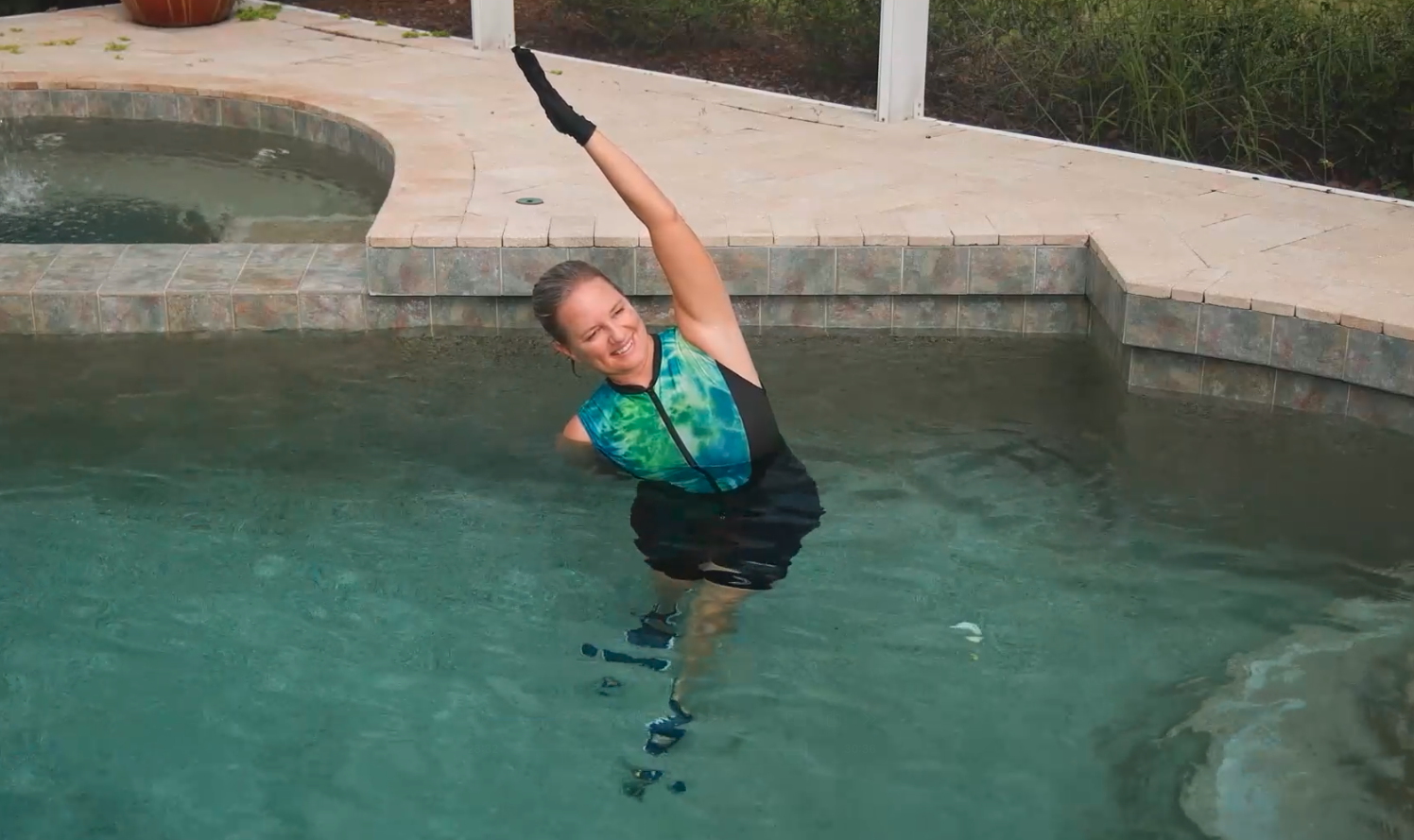
Water is not just the setting for HIYO—it’s one of the teachers.
It slows you down, offers constant feedback, and meets you with resistance from every direction. That feedback replaces guessing. As awareness grows, you learn how to recognize what your body needs as you move.
One hip may need strength. One shoulder may need mobility. Today may call for intensity—or restraint.
Water allows you to adapt movement within any workout. It removes the pressure to copy or compete and replaces it with clear feedback—so each session supports your body’s needs that day.
What Yoga Is—for Me
Yoga, as I practice it, is not about poses or performance. It’s not about stillness as silence.
It’s about attention. It’s about listening. It’s about creating space, so we can build strength, improve mobility, and meet life’s demands with clarity and trust.
That’s what I bring to the pool. That’s what lives inside HIYO. And that’s how yoga will always be part of how I teach.
Ready to experience this approach for yourself? Join us in the pool and discover how awareness and movement come together in Wavemakers.