
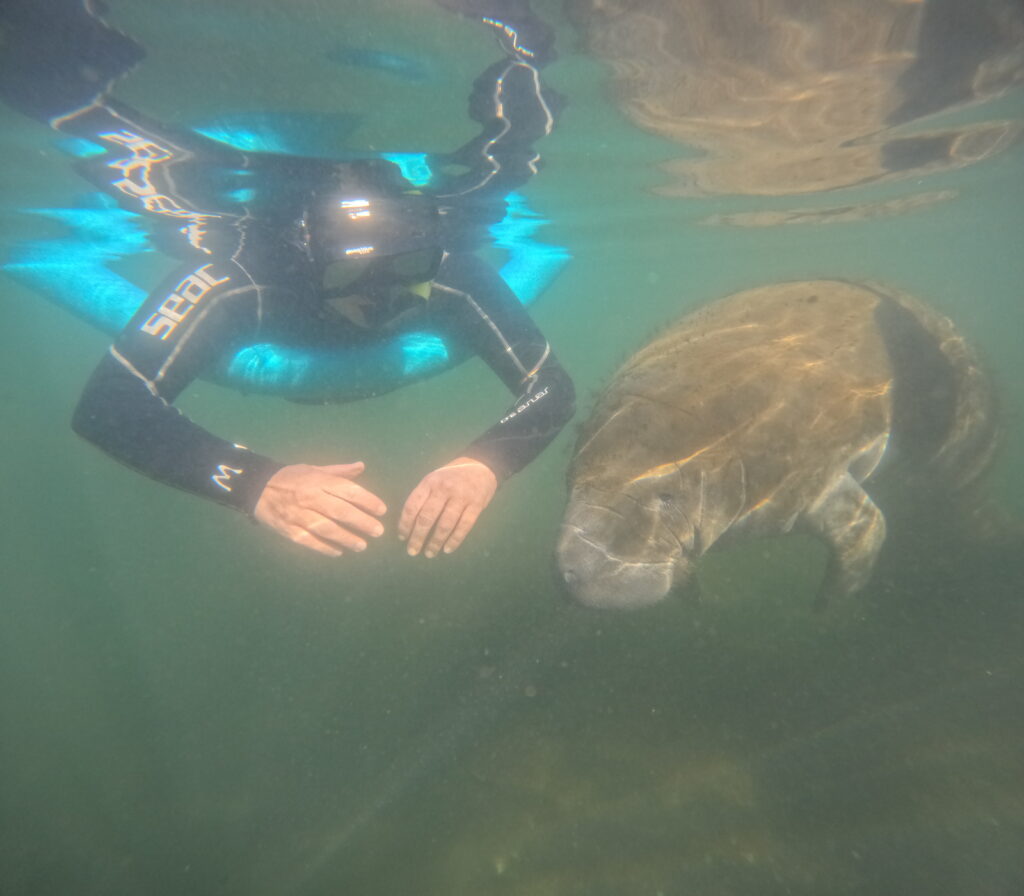
Each year, we return to Crystal River, Florida—the home of the manatees.
This year, the rules were clear and non-negotiable: No touching. Hands off. Even if they touched you, you didn’t touch back.
Noted.
Before we entered the water, our guide offered one simple piece of advice: “If you give them no attention, they’ll become curious about you.“
So we floated. Quietly, still, breathing slowly and on-purpose. Keeping as calm as we could.
And then something unexpected and amazing happened: in our stillness, the manatees came closer.
One gently wrapped a flipper around my husband’s arm, as if to say, here I am. Another drifted past with a playful roll, close enough that I could feel the soft brush of whiskers as they checked us out.
By doing less, and by not forcing the experience, we were invited in.
The same thing happens in movement. When we stop chasing results and start paying attention to what’s actually happening, something shifts. The body responds.
How intention showed up in my own practice
Years ago, I noticed a disconnect: I taught differently than how I moved in my own workouts.
As a teacher, I was very goal-focused. Every workout had a purpose. Every rep, set, and format was carefully planned. I applied what I knew so my students received what I believed were the best workouts.
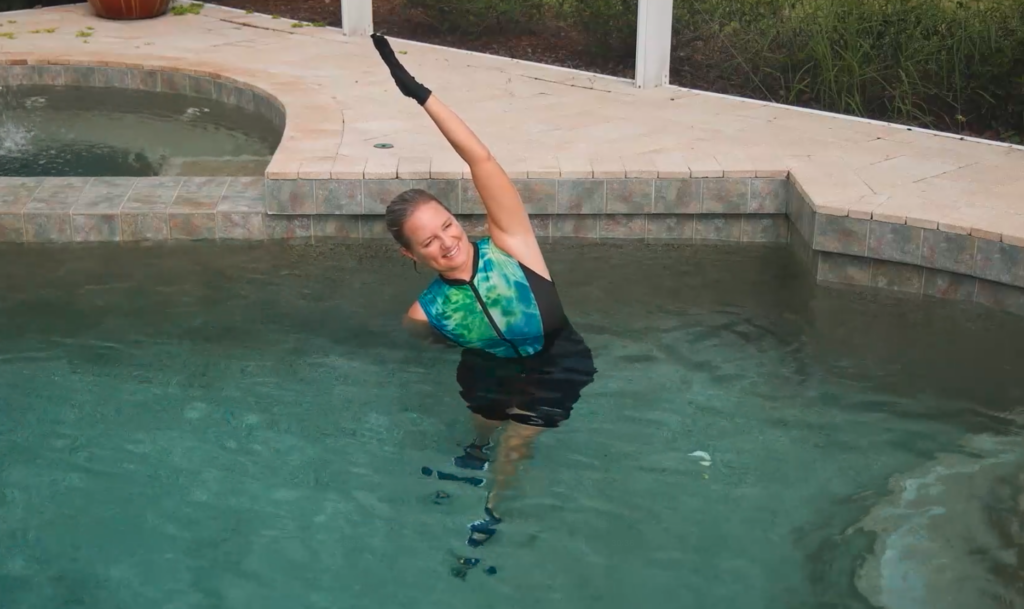
But when I stepped into the pool for myself, something else emerged: I moved playfully.
I explored stretches I couldn’t access on land, I pressed into the water when I wanted to feel stronger, and I followed curiosity instead of a checklist.
There was intention, but it wasn’t calculated, it was felt.
Over time, those two worlds began to merge. In 2017, I shifted away from instruction-only teaching and replaced it with a simple invitation:
Move in your feel-good range.
That invitation changed everything.
I wasn’t asking people to copy a movement anymore. I was helping them recognize the difference between doing a movement and feeling a movement.
Instruction still mattered, but sensation became the bridge.
Movement guided by awareness and feeling
Everything I teach today grew from that realization.
At Wavemakers, we follow a simple progression:
Awareness → Feeling → Intention
When you can feel what’s happening in your body, movement stops being a guess, and sensation becomes information.
You begin to recognize:
- when effort is helpful
- when range is available
- when your body is asking for something different
Intention isn’t about forcing results. It’s about choosing what you want movement to help you do today.
Some days that’s strength. Some days it’s mobility. Some days it’s simply moving in a way that feels safe and supportive.
All of it counts.
Why water matters
Water brings intention to life. It slows things down just enough for you to notice how effort, range, and direction actually feel.
When you adjust, the water responds, and that response builds trust.
Over time, and with practice, movement becomes something you participate in, rather than something you endure or push through.
And that skill doesn’t stay in the pool. It shows up in daily life:
- walking
- lifting
- balancing
- reaching
It shows up in knowing when to challenge yourself, and when to ease back without guilt or second-guessing.
That’s the adventure we’re on this year: learning to move with intention, trusting sensation, and allowing the body to meet us when we stop forcing and start listening.
If that way of moving feels like something you’ve been missing, you’re already closer than you think.
Ready to experience this approach for yourself? Join us in the pool and discover how awareness and movement come together in Wavemakers.