
Research-backed tips to help you coach water exercise with purpose.
When we think about intervals, most of the attention goes to the hard work. But recovery is part of the training too. One simple way to experience that is a 30–90 interval:
30 seconds hard. 90 seconds very easy. Repeat.
That longer recovery gives the body time to settle before asking it to create another strong effort.
Why Recovery Matters
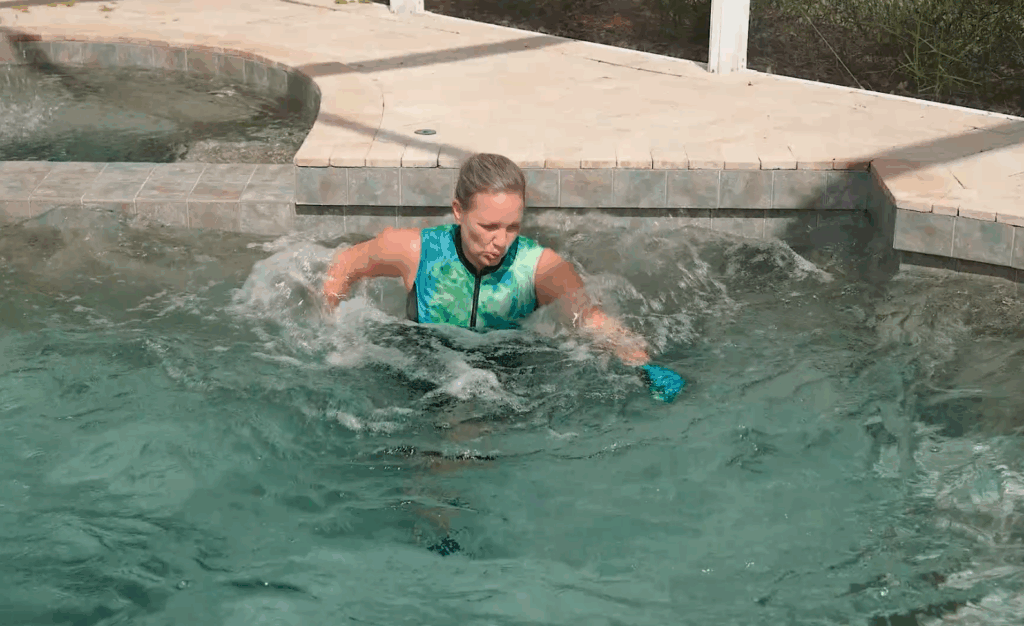
High-intensity interval training alternates harder work with recovery. There’s no single work-to-recovery ratio that’s right for every person or every goal, but here’s the important coaching point: if you want the hard interval to actually feel hard, the recovery needs to feel different.
If students keep working at a moderate pace during recovery, they may never come down enough to create that contrast. Slowing down gives breathing and effort a chance to settle, so they can intentionally build again.
Try This: 30–90
Choose one familiar whole-body movement — a jog, ski, jack, tuck, or traveling pattern. Then try:
30 seconds hard. Move at an effort that genuinely feels hard.
90 seconds very easy. Walk, gently jog, march, or change the movement enough for effort to noticeably drop.
Repeat 4–6 rounds.
Research has used this exact pairing — 30 seconds of high-intensity effort with 90 seconds of recovery — as one way to create a strong metabolic challenge.
What to Watch For
Watch the difference between the two intervals. Can students make hard look and feel different from easy?
During recovery, encourage them to slow down, decrease range, remove impact, or choose a simpler movement. Then let them build again.
A cue I like: “Let easy be easy enough that you can make hard feel hard again.”
Why This Matters in Water Exercise
The pool gives students many ways to change effort without changing the entire exercise. The same movement can become harder with more speed, range, resistance, or impact. Then it can become recovery by slowing down, getting grounded, making the movement smaller, or simply walking.
That’s an important skill to practice. Intensity isn’t only about knowing how to work harder — it’s knowing how to change what you’re doing to meet the goal.
Try It in Your Next Class
Choose one movement and coach four rounds of 30 seconds hard / 90 seconds easy. Then ask: What did you change to make your recovery actually feel easy?
Their answers will tell you whether they’re beginning to understand how to manage their own intensity.
Effects of High-Intensity Interval Training Protocols on Blood Lactate Levels and Cognition in Healthy Adults (2023); Xue, Xu & Zhang, HIIT and Tabata Protocols for Improving Physical and Cognitive Health (2026).
About the author
Lori Sherlock, is a professor at West Virginia University, exercise physiologist and seven-time Ironman world competitor. Her superpower is getting you results! She coordinates and teaches the aquatic therapy curriculum within the division of Exercise Physiology and is proud to state that it is the only one like it in the nation.
Discover Wavemakers
Inside Wavemakers, we use the pool to make movement feel more doable, more supportive, and more enjoyable.